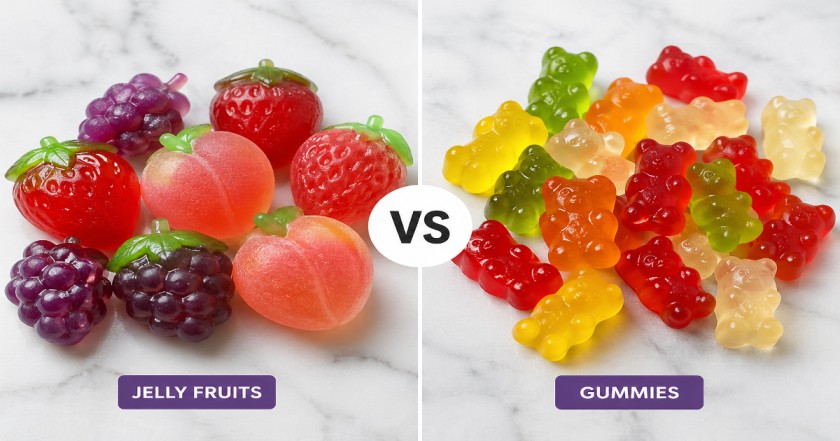
Jelly fruits and gummies look similar but differ in texture, ingredients, and nutrition. Jelly fruits use plant-based gelling agents, real fruit juice, and have a soft, juicy center wrapped in an edible film. Gummies rely on gelatin, are denser and chewier, and typically contain more sugar and artificial additives. Jelly fruits are usually vegan-friendly and lighter, while gummies offer bold flavors and nostalgic appeal.
Jelly fruit vs gummies — if you’ve ever stood in the candy aisle wondering which one to grab, you’re not alone. These two treats may share bright colors and fruity flavors, but bite into each and you’ll discover two completely different experiences. One bursts with juice and melts on your tongue; the other demands a satisfying chew that lingers. In this guide, we’ll break down the real differences so you can pick the perfect snack for your cravings.
Table of Contents
Introduction: Why Everyone’s Confused
Walk down any candy aisle or scroll through TikTok, and you’ll see them everywhere—colorful, squishy, fruit-shaped treats that look almost identical. But here’s the thing: jelly fruit vs gummies isn’t just a matter of semantics. These two popular snacks have distinct differences that most people completely overlook.
I remember the first time I bit into a jelly fruit. It was wrapped in a thin, edible film, exploded with juice, and had a texture nothing like the gummy bears I grew up with. That moment made me realize—there’s a whole world of difference hiding behind those similar-looking packages.
If you’ve ever stood in the snack aisle wondering whether to grab a bag of jelly fruits or classic gummy candies, you’re not alone. This guide breaks down everything you need to know about jelly fruit vs gummies—from ingredients and texture to health benefits and flavor experiences. By the end, you’ll know exactly which treat fits your cravings (and your diet).
What Is Jelly Fruit?
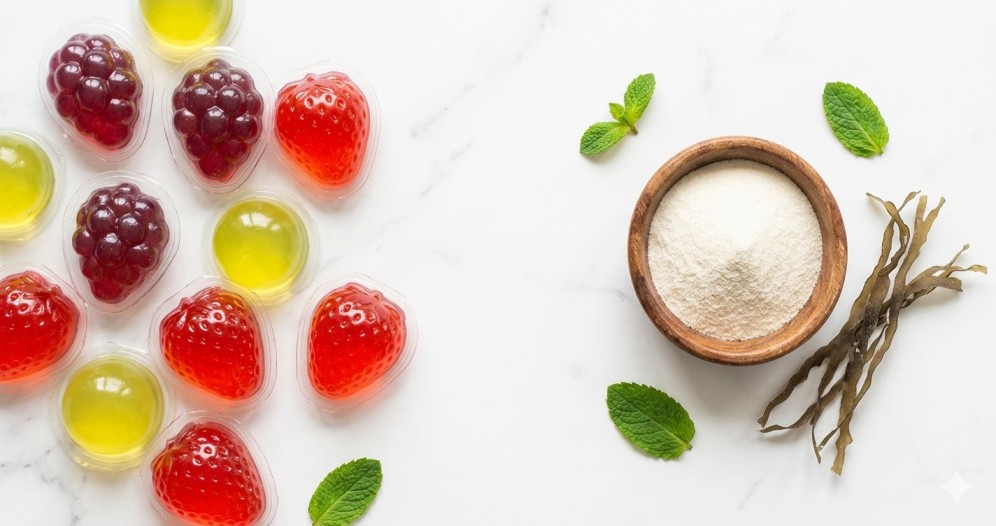
Jelly fruit is a relatively new sensation in the candy world, though it has roots in traditional Asian confectionery. These treats are typically made from fruit juice or fruit puree, combined with gelling agents like agar-agar, pectin, or konjac. What makes them stand out is their unique structure.
Most jelly fruits come individually wrapped in a thin, edible membrane made from seaweed extract or rice paper. When you bite into one, you get an immediate burst of fruity liquid or a soft, gelatinous center. They’re often shaped like miniature fruits—grapes, strawberries, peaches, or mangoes—and have a delicate, almost bouncy texture.
The viral “Hit or Miss” TikTok trend brought jelly fruits into the mainstream, with people trying to pop them into their mouths whole. But beyond the social media hype, jelly fruits represent a different approach to fruit-based snacking. They feel fresher, lighter, and less processed than traditional candy.
Many jelly fruit products also lean toward natural ingredients. You’ll often find real fruit juice listed as the first ingredient, with fewer artificial colors and flavors compared to conventional sweets. Some brands even market them as a healthier alternative to standard candy, though we’ll dig into that claim later.
What Are Gummies?
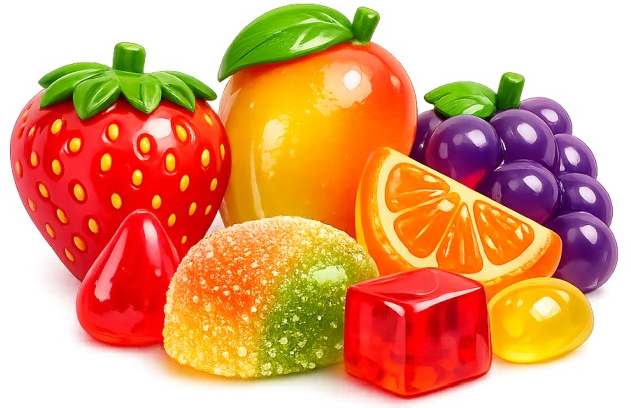
Gummies, on the other hand, are the classic candy most of us know by heart. Gummy bears, gummy worms, sour gummy rings—these chewy treats have been around since the 1920s when Hans Riegel invented the first gummy bear in Germany.
Traditional gummies are made using gelatin as their primary gelling agent. Gelatin is derived from animal collagen (usually pork or beef), which gives gummies their signature chewy, rubbery texture. The base mixture includes sugar, glucose syrup, flavorings, and colorings—often artificial.
The texture of gummies is denser and more resistant than jelly fruits. You can stretch a gummy bear. You can chew it for a while. It doesn’t burst or dissolve quickly. That chewiness is exactly what gummy lovers crave.
In recent years, the gummy market has exploded beyond candy. We now have vitamin gummies, CBD gummies, protein gummies, and even sleep aid gummies. The format has become a delivery system for everything from supplements to cannabis. But at their core, traditional gummy candies remain sugar-forward, gelatin-based treats with bold flavors and bright colors.
Jelly Fruit vs Gummies: The Key Differences
Now let’s get into the meat of it. When you compare jelly fruit vs gummies side by side, several clear distinctions emerge. These differences go far beyond appearance and affect everything from how they taste to how your body processes them.
Texture and Mouthfeel
This is where the two diverge most dramatically.
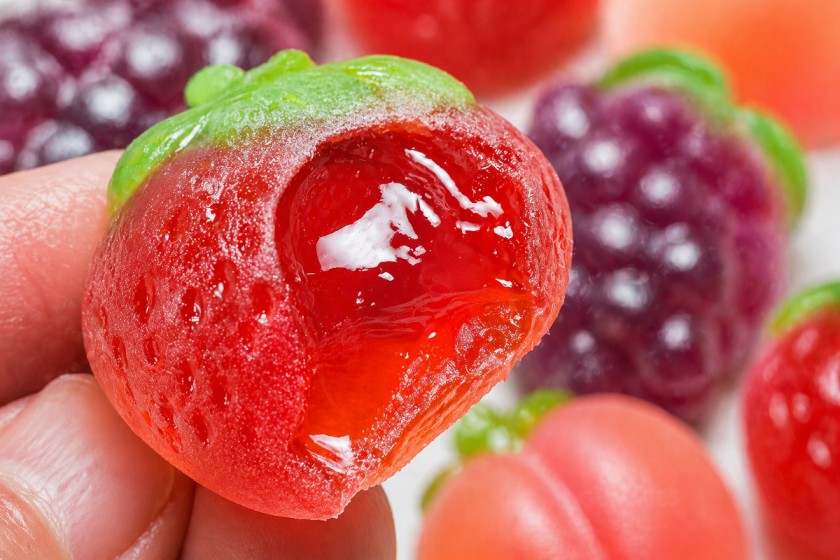
Jelly fruits have a soft, delicate, almost pudding-like interior. The outer edible skin provides a slight resistance before giving way to a smooth, juicy center. Some varieties are more solid, while others contain actual liquid that squirts out when bitten. The overall sensation is light, refreshing, and quick to dissolve.
Gummies are chewy, dense, and elastic. Thanks to gelatin, they snap back when pulled and require actual effort to break down. The experience is more about prolonged chewing and savoring. Gummies linger in your mouth; jelly fruits disappear quickly.
If you prefer a snack that feels like eating fresh fruit, jelly fruits win. If you want something to mindlessly chew on during a movie, gummies are your pick.
Ingredients and Composition
The ingredient lists tell a very different story.
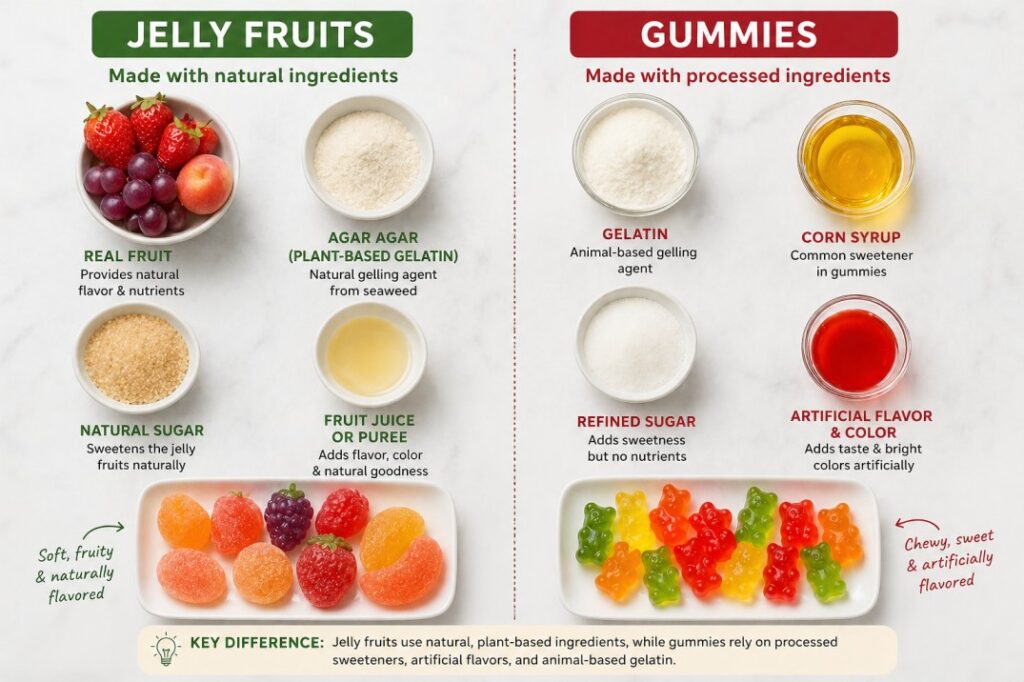
Jelly Fruits Typically Contain:
- Fruit juice or puree (first ingredient in quality brands)
- Agar-agar, pectin, or konjac (plant-based gelling agents)
- Sugar or natural sweeteners
- Citric acid for tartness
- Natural flavors and colors
- Edible film (seaweed or rice-based)
Gummies Typically Contain:
- Glucose syrup or corn syrup
- Sugar
- Gelatin (animal-derived)
- Artificial flavors and colors
- Citric acid
- Carnauba wax or beeswax (for shine)
For vegetarians, vegans, or anyone avoiding pork products, this is a critical distinction. Most jelly fruits are naturally vegan-friendly because they use plant-based gelling agents. Traditional gummies contain gelatin, making them unsuitable for plant-based diets.
That said, some modern gummy brands have switched to pectin or agar to create vegan options. But the classic gummy bear? Still gelatin-based.
Flavor Profiles
Jelly fruits tend to taste more authentic to actual fruit. Because they often use real fruit juice, the flavors are subtler, more natural, and less aggressively sweet. A grape jelly fruit actually tastes like grape—not “purple.”
Gummies lean into bold, artificial flavor territory. That isn’t necessarily bad; it’s part of their charm. A gummy bear’s “strawberry” flavor is its own distinct thing—a nostalgic, candy-specific taste that doesn’t really exist in nature. Gummies also come in sour varieties more commonly than jelly fruits, which tend to stay in the sweet-tart range.
Nutritional Value
Let’s be honest—neither of these is health food. But there are meaningful differences.
Jelly fruits generally contain less sugar per serving than gummies, primarily because they contain more water and fruit content. They also tend to be lower in calories and fat-free. Some brands add vitamin C or position themselves as “better-for-you” snacks.
Gummies are more calorie-dense and sugar-heavy. A small handful of gummy bears can pack 20+ grams of sugar. Vitamin gummies might seem healthier, but they often contain just as much sugar as candy gummies—sometimes more.
However, portion control matters with both. It’s easy to overeat jelly fruits because they feel lighter and less filling. That “health halo” can lead to consuming more than you intended.
Packaging and Presentation
Jelly fruits usually come in individual wrappers, making them convenient for lunchboxes, parties, or portion control. Their fruit-shaped designs make them visually appealing and gift-worthy. Many Asian brands package them in elegant boxes, positioning them as premium treats.
Gummies typically come in resealable bags or pouches, designed for casual snacking and sharing. The packaging is more functional than decorative. You buy a bag of gummies to eat throughout the week, not to hand out one by one.
Are Jelly Fruits Healthier Than Gummies?
This is the question everyone asks, and the answer is: it depends.
Jelly fruits have some legitimate advantages. They’re often made with real fruit juice, use plant-based ingredients, and contain less sugar. For vegans, vegetarians, or people with religious dietary restrictions (like halal or kosher), jelly fruits are usually the safer choice.
But “healthier” is a loaded word. Many jelly fruits still contain added sugars, and some use high-fructose corn syrup. The fruit juice content varies wildly by brand—some are mostly juice, others use it as a minor ingredient. That edible outer film? It’s safe to eat, but it’s still processed.
Gummies have their own health considerations. The gelatin in traditional gummies actually provides collagen, which supports skin, hair, and joint health. Some people specifically eat gummies for this benefit. And if you’re choosing vitamin gummies, you’re at least getting some nutritional value alongside the sugar.
The bottom line? Neither is a superfood. If you’re looking for a lower-sugar, plant-based option, quality jelly fruits edge ahead. If you want a protein-containing treat or need vitamin supplementation, certain gummies make sense. Always check the label rather than assuming based on category.
Which One Should You Choose?
Your choice between jelly fruit vs gummies really comes down to what you’re looking for in a snack.
Choose Jelly Fruits If:
- You want a lighter, fresher snacking experience
- You prefer natural fruit flavors
- You follow a vegan or vegetarian diet
- You like unique textures and viral food trends
- You want individually wrapped portions
- You’re looking for a gift-worthy or premium treat
Choose Gummies If:
- You love chewy, long-lasting candy
- You want bold, nostalgic flavors
- You need a portable, shareable bag of snacks
- You’re taking vitamins or supplements in gummy form
- You enjoy sour or novelty-shaped candies
- You want something widely available at any convenience store
There’s also no rule saying you can’t enjoy both. I keep jelly fruits in my desk drawer for a quick, light sweet fix, and gummies in my pantry for movie nights. Different moods call for different treats.
Popular Brands and Where to Buy
Jelly Fruit Brands:
- Frutti Fresh – Known for realistic fruit shapes and juicy centers
- TikTok viral jelly fruits – Various Asian import brands
- DinDon Foods – Popular for the “Hit or Miss” trend
- Japanese fruit jellies – Often found at Asian grocery stores
Gummy Brands:
- Haribo – The original gummy bear, still iconic
- Albanese – Known for soft, flavorful gummies
- Black Forest – Organic and natural options available
- Olly/Ritual – Leading vitamin gummy brands
You can find jelly fruits at Asian supermarkets, Amazon, and specialty online retailers. Gummies are everywhere—gas stations, grocery stores, pharmacies, and online.
FAQs
Are jelly fruits the same as gummies?
No. While both are fruit-flavored, chewy treats, they differ significantly in ingredients, texture, and composition. Jelly fruits use plant-based gelling agents and often contain real fruit juice, while gummies traditionally use gelatin and have a denser, chewier texture.
Can vegetarians eat jelly fruits?
Yes, most jelly fruits are vegetarian and vegan-friendly because they use agar-agar, pectin, or konjac instead of animal-derived gelatin. However, always check the ingredient list to be certain.
Why do jelly fruits burst when you bite them?
Some jelly fruits are designed with a liquid center or very soft gel interior. The thin edible membrane holds everything together until bitten, creating that satisfying burst effect that made them viral on social media.
Are gummies bad for your teeth?
Both jelly fruits and gummies contain sugar, which can contribute to tooth decay. However, gummies tend to stick to teeth more than jelly fruits, potentially increasing cavity risk. Rinse with water after eating and practice good oral hygiene.
Which has more sugar: jelly fruits or gummies?
Generally, gummies contain more sugar per serving because they’re denser and more concentrated. Jelly fruits have higher water content, which naturally lowers sugar concentration. But this varies by brand, so always read nutrition labels.
What is the edible wrapper on jelly fruits made of?
The thin, transparent wrapper on most jelly fruits is made from seaweed extract (sodium alginate) or rice paper. It’s completely edible, tasteless, and food-safe.
Conclusion: The Sweet Verdict
So, jelly fruit vs gummies—which one comes out on top? The honest answer is that neither is objectively better. They’re simply different experiences for different cravings.
Jelly fruits offer something fresh, light, and slightly exotic. They feel like a modern evolution of fruit snacking, with natural flavors and plant-based ingredients that appeal to health-conscious and vegan consumers. The individual wrapping and beautiful presentation make them feel special.
Gummies deliver nostalgia, bold flavors, and that satisfying chew that has defined candy for nearly a century. They’re accessible, versatile, and have expanded far beyond candy into vitamins, supplements, and wellness products.
My advice? Try both. Pay attention to what your taste buds and body respond to. Check ingredient lists rather than making assumptions. And most importantly, enjoy whatever treat you choose without guilt—because life’s too short for bad candy.
Whether you’re team jelly fruit or team gummy, there’s a whole world of chewy, fruity deliciousness waiting for you. Happy snacking!