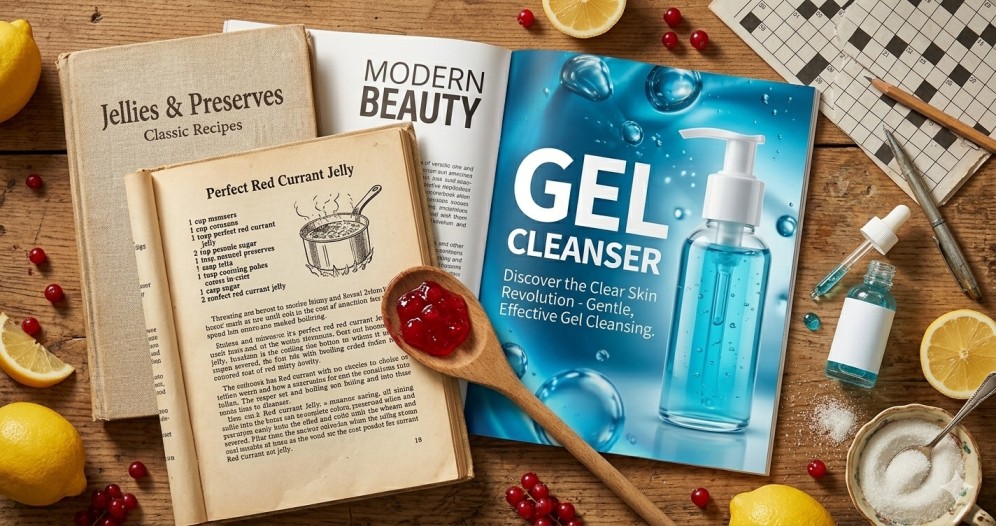
We’ve all been there. Sunday morning, coffee going cold, pen hovering over the newspaper. The clue reads: “Skin cleanser or jellied fruit topping.” Four letters. You stare at it. You check the crossing letters. You mutter under your breath.
The answer is gel. Or sometimes jelly, depending on your puzzle’s mood that day.
But here’s the thing—this clue isn’t just crossword constructor mischief. It’s a genuine reflection of how we use language in completely different spheres without realizing the overlap. One word, two lives. Your bathroom cabinet and your grandmother’s pantry, suddenly holding hands.
Why This Clue Drives People Nuts
Crossword constructors love these moments. They live for the solver’s groan, the eye-roll, the “oh come ON” that escapes when the answer finally clicks. “Skin cleanser or jellied fruit topping” is classic misdirection. Your brain immediately starts hunting for some obscure word that bridges dermatology and breakfast foods. Maybe there’s a fancy French term? Some vintage ingredient?
Nope. It’s just “gel.” Plain, boring, four-letter gel.
The trick works because of how our brains categorize information. When you read “skin cleanser,” you activate one mental file folder. When you read “jellied fruit topping,” you open another. Most people don’t keep those folders adjacent. The crossword forces you to crash them together, and there’s something genuinely satisfying when they collide.
I’ve watched my mother—sharp as a tack, does the Times puzzle in ink—get stuck on clues like this for ten minutes. She’ll have G-E- filled in from crossing words and still not see it. “Gel?” she’ll say when I finally crack. “That’s not fair. That’s two completely different things.”
Exactly.
The Bathroom Version: Actually Using Gel Cleansers
Let’s talk about the skincare side, because this is where people get genuinely confused about what they’re buying.
Gel cleansers showed up big in the 1990s when everyone decided oil was the enemy. Remember those astringent, blue-tinted bottles that smelled like rubbing alcohol? That was the early gel cleanser era. We’ve thankfully evolved.
What you’re actually getting: A water-heavy formula thickened into that characteristic slippery texture. The gel consistency comes from polymers—basically tiny molecular nets that trap water and give the stuff its shape. Spread it on your face, and it feels cool and light. Rinse it off, and your skin feels clean. Not moisturized, necessarily, but clean.
Who actually needs this: People with oily skin. People who live in humid climates and can’t stand the feeling of cream sitting on their faces. People who wash their face three times a day because they feel grimy and need something that won’t build up.
I used a gel cleanser exclusively through my twenties because I was convinced my face was an oil slick. Turns out I was just using the wrong moisturizer and my skin was overcompensating. Classic mistake. The gel cleanser wasn’t helping, but it wasn’t the root cause either. It was just… there. Doing its job. Removing surface oil without adding anything back.
The reality check: Gel cleansers don’t work for everyone. If your face feels tight after washing—like you smiled and your skin might crack—you’re using the wrong cleanser. That squeaky-clean feeling isn’t healthy skin; it’s stripped skin. Your barrier is crying for help.
My dermatologist put it bluntly: “Gel cleansers are for people who produce too much oil. Everyone else is just following marketing.” She wasn’t wrong. Walk into any drugstore and the gel options outnumber the creams three to one because they look modern and clean and appeal to younger buyers. Doesn’t mean they’re right for your face.
The Kitchen Version: Jelly as Actual Food
Now the other half of that crossword clue. Jellied fruit topping. Jelly. The stuff in the jar with the lid that makes that satisfying pop when you open it.
Here’s where I admit personal bias: I grew up on grape jelly from a jar with a yellow label. It was basically purple sugar, and I loved it. My mother bought it by the case. We didn’t call it “jellied fruit topping” because we weren’t monsters. We called it jelly, and we put it on white bread with peanut butter, and that was lunch.
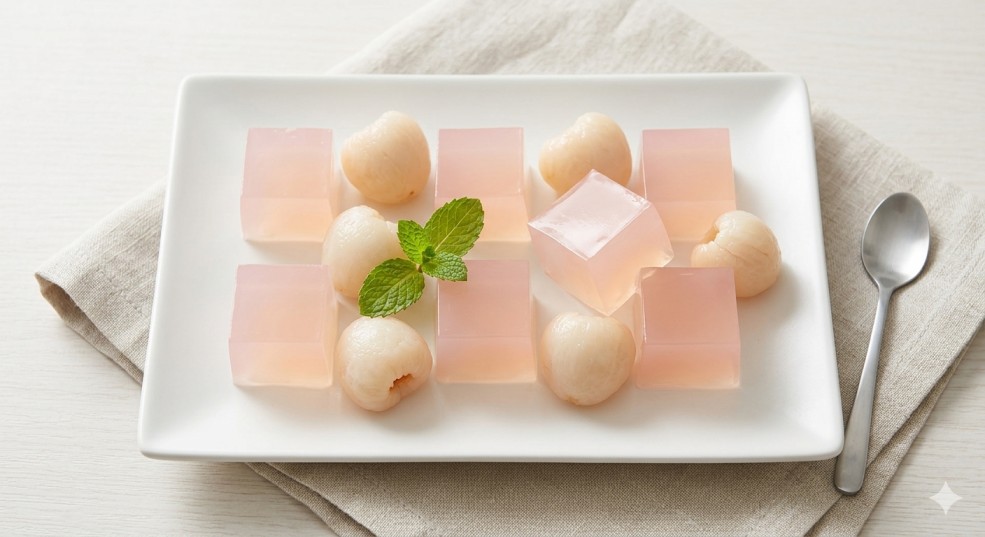
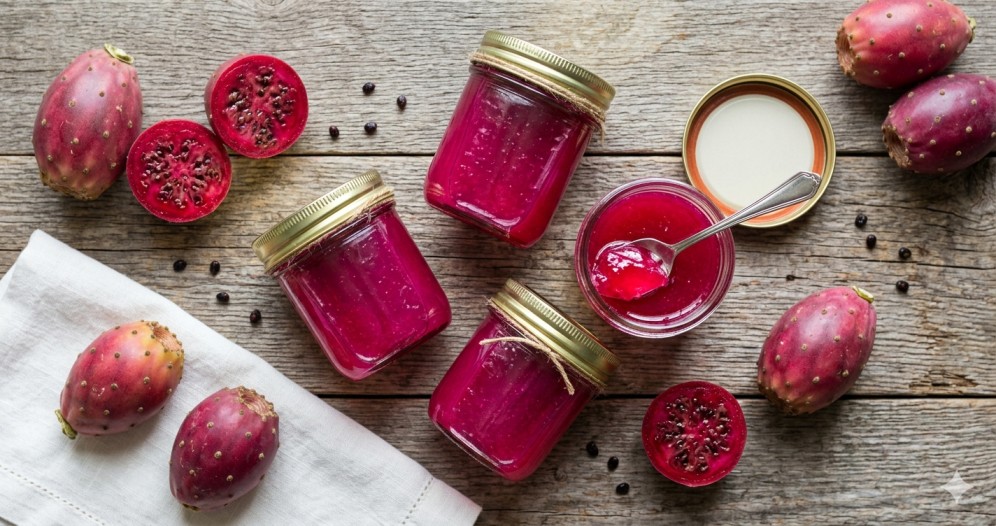
The actual difference nobody explains: Jelly uses fruit juice. Jam uses crushed fruit. Preserves use chunks. Marmalade uses citrus peel. The crossword clue specifically says “jellied” because it’s describing that particular texture—the clear, wobbly, holds-its-shape quality that comes from pectin or gelatin setting up firm.
My grandmother made crabapple jelly every fall. She’d cook the apples, strain the juice through cheesecloth overnight (don’t squeeze the bag or the jelly clouds, she’d warn), then boil it with sugar until it reached the right temperature. The result was ruby-clear, sweet-tart, and genuinely beautiful in a way no store-bought version matches.
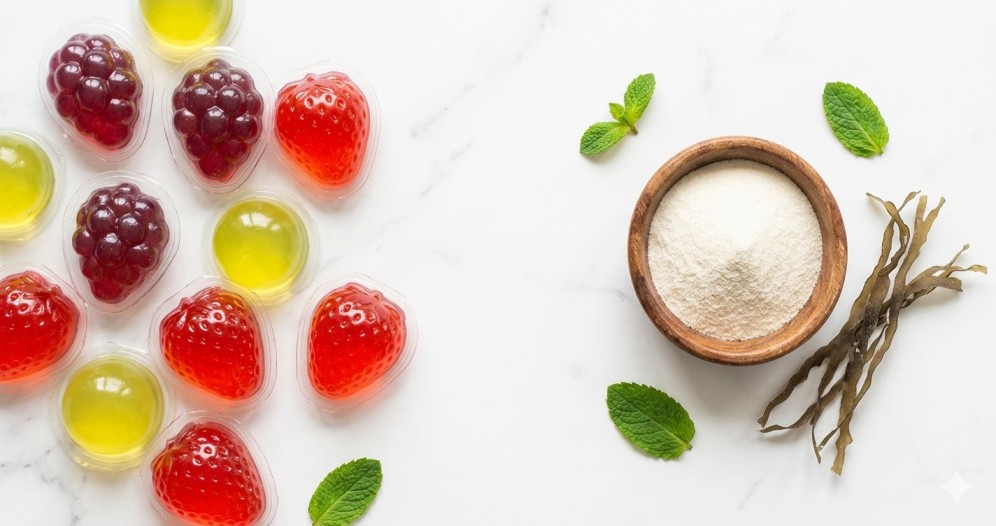
She also used gelatin for other things—tomato aspic, which I found horrifying as a child, and fruit salads suspended in clear gel, which seemed magical. The same ingredient that makes face wash spreadable makes dessert wobbly. There’s something slightly unsettling about that overlap if you think too hard about it.
The Weird Connection: Gelatin and Your Face
Speaking of thinking too hard—let’s go there.
Gelatin, the stuff in jelly, comes from collagen. Boiled bones and connective tissue, essentially. It’s why homemade bone broth gets that jiggly layer when chilled. Your grandmother’s face cream probably contained some version of this. The beauty industry has been obsessed with collagen forever because it’s the structural protein that keeps skin plump and elastic.
Here’s the irony: putting collagen on your face doesn’t do much. The molecules are too big to penetrate. But eating collagen? There’s actual research suggesting it helps, though the mechanisms are debated. That jelly on your toast might contribute amino acids your body uses to build its own collagen. Maybe. The science is young and messy.
Meanwhile, your gel cleanser almost certainly doesn’t contain collagen. It contains the word “collagen” on the label sometimes, as marketing fluff. What it actually contains are detergents—gentler than soap, but detergents nonetheless—suspended in that gel matrix. The gel texture helps it spread evenly and rinse clean. That’s the job. It’s not feeding your skin; it’s cleaning it.
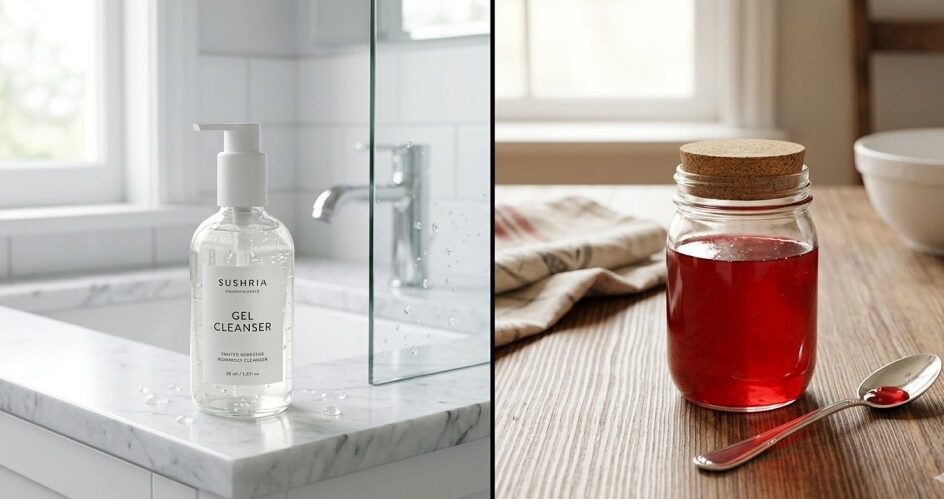
The two gels—face and food—share a texture and a name and essentially nothing else. One you wash down the drain. One you digest into component parts. The crossword clue treats them as equivalent, and linguistically they are. Practically? Not even close.
How to Actually Choose These Things
Since I’ve now made both sound slightly suspicious, some practical advice from someone who has overthought both categories:
For your face: Ignore the marketing words. “Gel,” “cream,” “foam,” “balm”—these describe texture, not function. Read the actual ingredients. If you see sodium lauryl sulfate or ammonium lauryl sulfate high on the list, and you have sensitive or dry skin, put it back. If you see lots of botanical extracts and fragrance oils, and you have reactive skin, put it back. The best gel cleanser I ever used was boring and fragrance-free and came in a huge pump bottle from the dermatologist’s office. It cleaned my face without drama. That’s the goal.

For your toast: Same principle. Ignore the front label art. Read the ingredients. Fruit should be first. Sugar should not be the main event. “Spread” usually means “we stretched this with corn syrup.” “Preserves” often means higher fruit content but check anyway. The expensive stuff in the fancy jar isn’t automatically better, but the cheap stuff in the plastic tub is usually worse. My current compromise is a mid-range strawberry jam with visible seeds. It tastes like actual strawberries. Revolutionary concept.
The Crossword Lesson
Back to the puzzle. The reason “skin cleanser or jellied fruit topping” works—the reason constructors keep using variations of this clue—is that it catches you in your own assumptions. You assume technical vocabulary for skincare. You assume homey vocabulary for food. The crossword doesn’t care about your assumptions.
The best solvers I’ve known share one trait: they hold multiple meanings lightly. They don’t lock into one category. When they see “lead,” they think metal, verb, dog leash, news story. When they see “gel,” they’re ready for hair product, face wash, dessert, or that stuff they use in laboratories to grow bacteria.
This particular clue, though, has a special place because of the absurdity gap. The distance between skincare science and breakfast condiment is so vast that bridging them feels like a joke. The constructor is winking at you. “I know these don’t belong together,” the clue says. “But here we are.”
And here we are. Standing in the drugstore aisle, holding a bottle of something clear and slippery, remembering suddenly that the same word describes what’s on our morning toast. Language is weird. Bodies are weird. The crossword is just holding up a mirror.
Some Quick Answers to Questions Nobody Asked
Can you wash your face with actual jelly? Please don’t. The sugar would feed bacteria, the pH would disrupt your barrier, and you’d attract insects. This shouldn’t need saying, but internet culture demands explicit warnings.
Is there a face wash that smells like grape jelly? Probably. I haven’t found it, and I’m not looking. The intersection of “fruit-scented” and “skincare” is generally a danger zone for sensitive skin types.
Why do constructors use “jellied fruit topping” instead of just “jam”? Because “jam” is three letters and doesn’t fit the grid. Also, “jellied” specifies the texture that matches the face wash. Precision matters in crosswords, even when the result sounds slightly ridiculous.
What’s the hardest version of this clue you’ve seen? The New York Times once ran “It can hold your hair or your peanut butter.” Same answer: gel. That one took me twenty minutes and a lot of crossed-out letters.
Final Thought
The next time you’re staring at a crossword, stuck on some clue that seems to reference two unrelated things, remember the gel. Remember that language overlaps in strange places, that your bathroom and kitchen share vocabulary, that the puzzle is playing with you because that’s the game.
And maybe check whether that gel cleanser is actually what your face needs, or whether you’re just buying it because it looks medical and efficient. The crossword won’t tell you. But your skin might.
About the author: Has completed approximately 4,000 crossword puzzles and owned too many face washes. Currently using a cream cleanser and apricot preserves. The grid giveth and the grid taketh away.